
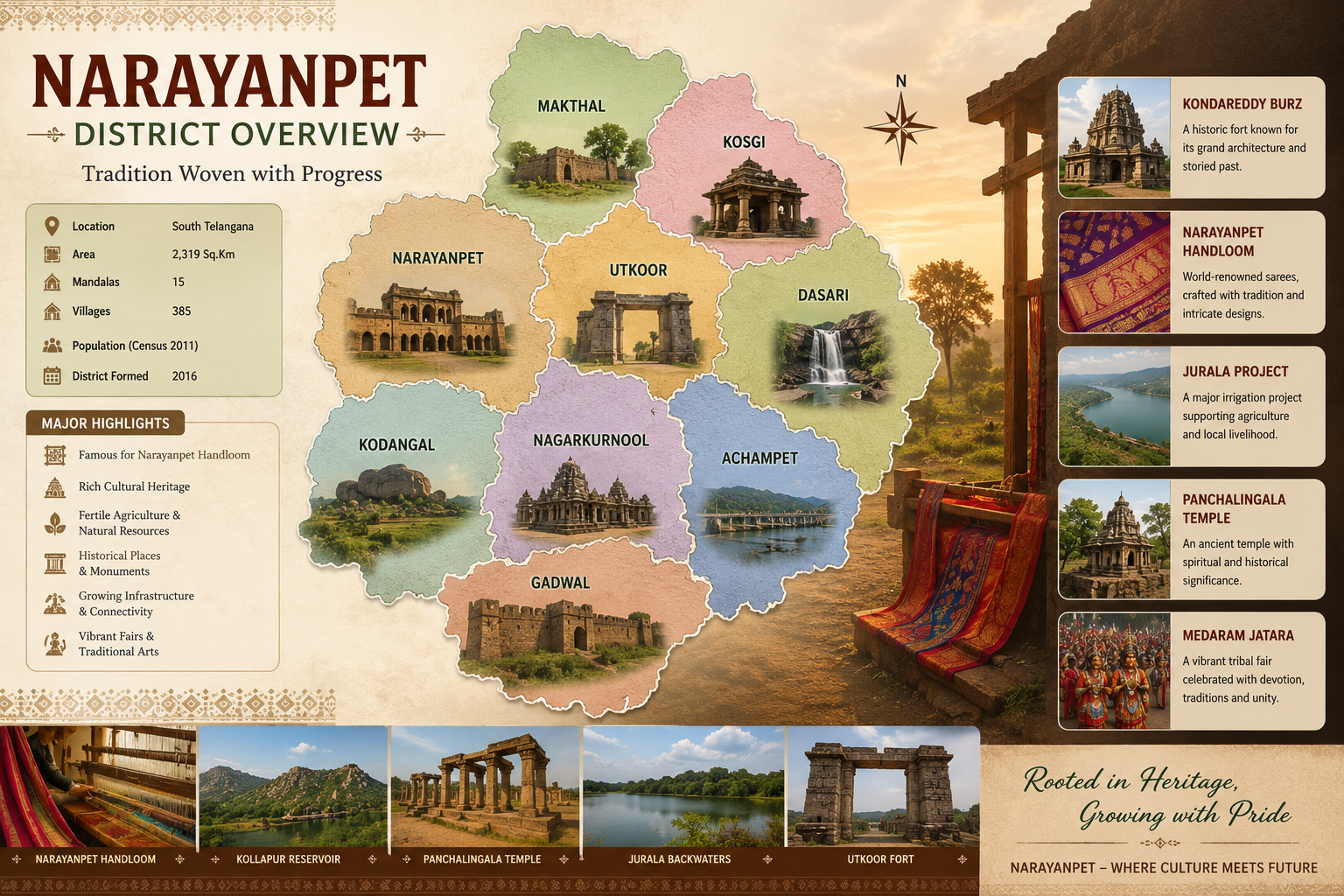
Narayanpet Overview
Narayanpet district, located in the southern region of Telangana, is known for its rich cultural heritage, traditional handloom industry, historical importance, and scenic landscapes. The district represents a blend of tradition, development, agriculture, and growing urban connectivity. Famous for its unique Narayanpet handloom sarees, the region showcases the skills and craftsmanship passed through generations. With its historical monuments, temples, reservoirs, and vibrant local culture, Narayanpet continues to preserve its identity while moving towards economic and infrastructural growth. The district plays an important role in promoting agriculture, rural development, and sustainable progress in Telangana.Narayanpet continues to emerge as a district of opportunities, where heritage, innovation, and promising future
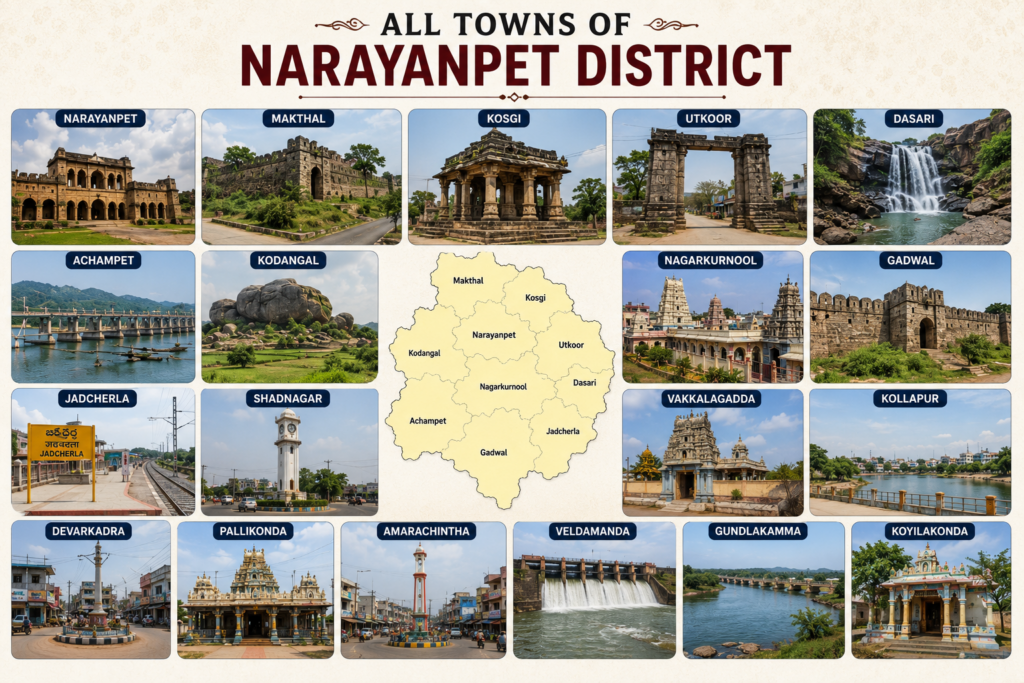
Narayanpet – Towns & Communities
Narayanpet district consists of several towns that play an important role in the region’s cultural, economic, and administrative growth. The district’s major towns include Narayanpet, Makthal, Kosgi, Utkoor, Damaragidda, Maddur, Maganoor, Marikal, Narva, and other developing urban centers.Narayanpe,the district headquarters, is famous for its traditional handloom sarees and vibrant textile industry. Makthal is known for agriculture, local markets, and historical significance, while Kosgi and Utkoor serve as important centers for trade, education, and connectivity. Other towns contribute through farming, small-scale industries, local businesses, and cultural activities.Together, these towns represent the unique identity of Narayanpet, combining traditional heritage with modern development and creating opportunities for the people of the district.
Population of Narayanpet
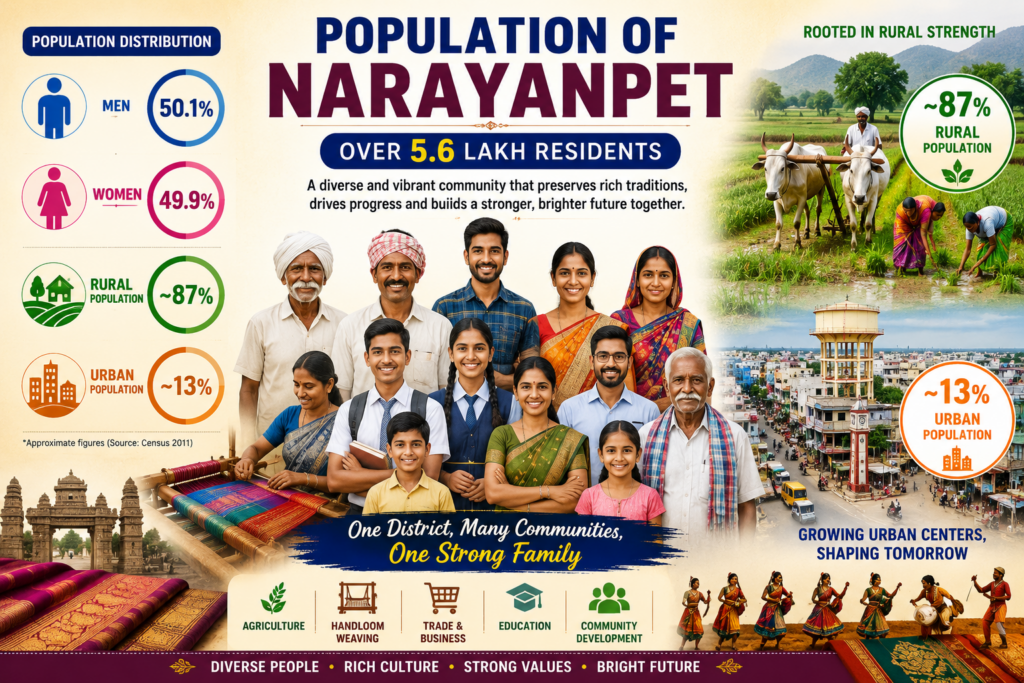
With a population of over , Narayanpet is a thriving district that represents a harmonious blend of tradition, culture, and progress. The district’s population is characterized by its diversity, with people from various communities contributing to its social, cultural, and economic development.A significant portion of the population resides in rural areas, where agriculture serves as the primary source of livelihood. The district is also renowned for its handloom weaving industry, particularly the famous Narayanpet sarees, which provide employment and preserve a rich cultural legacy. Alongside farming and weaving, trade, education, and small-scale enterprises play an important role in supporting the local economy.Narayanpet’s people are known for their strong work ethic, community spirit, and commitment to preserving traditional values.
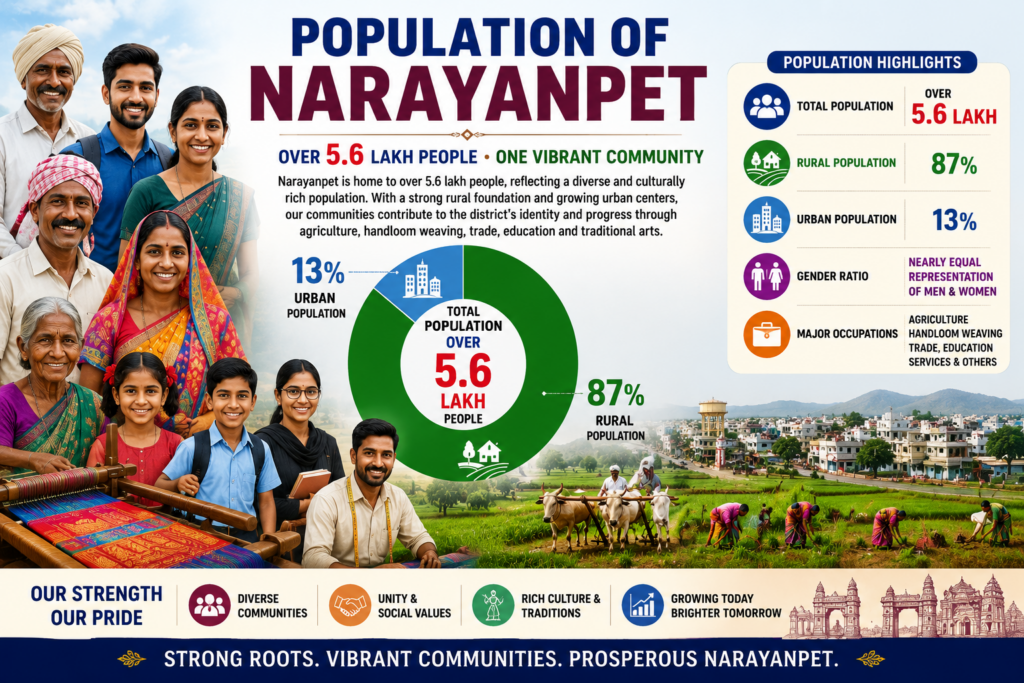
Population Chart.
Home to over 5.6 lakh people, Narayanpet is a district where tradition, culture, and progress come together. Its population reflects a rich blend of communities that contribute to the district’s social harmony, economic growth, and cultural vibrancy.From the fertile agricultural fields that sustain livelihoods to the renowned handloom weaving tradition that brings global recognition, the people of Narayanpet are at the heart of every achievement. Their dedication, resilience, and entrepreneurial spirit continue to drive development across the district.As Narayanpet grows and evolves, its people remain its greatest asset—preserving a proud heritage while embracing new opportunities for education, innovation, and prosperity. Together, they are shaping a future that is inclusive, dynamic, and deeply rooted in community values
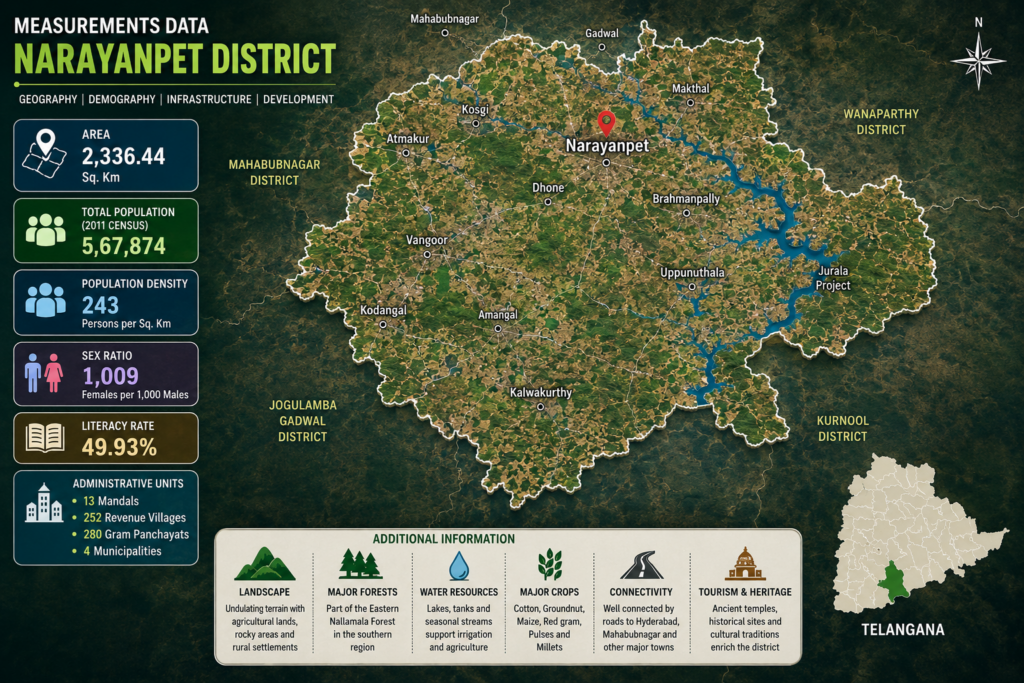
Narayanpet – Measurement Data
Narayanpet District covers a geographical area of approximately 2,336.44 square kilometers and is situated in the southwestern region of Telangana. Despite being one of the smaller districts in the state by area, Narayanpet holds significant importance due to its rich cultural heritage, agricultural economy, and renowned handloom industry. The district features a mix of fertile agricultural lands, rural settlements, rocky terrain, and small water bodies that support local livelihoods and economic activities.Agriculture serves as the backbone of the district’s economy, with crops such as cotton, groundnut, maize, and pulses being widely cultivated. Narayanpet is also widely recognized for its traditionalNarayanpet handloom sarees, which reflect the district’s rich weaving heritage and contribute significantly to local employment and trade.
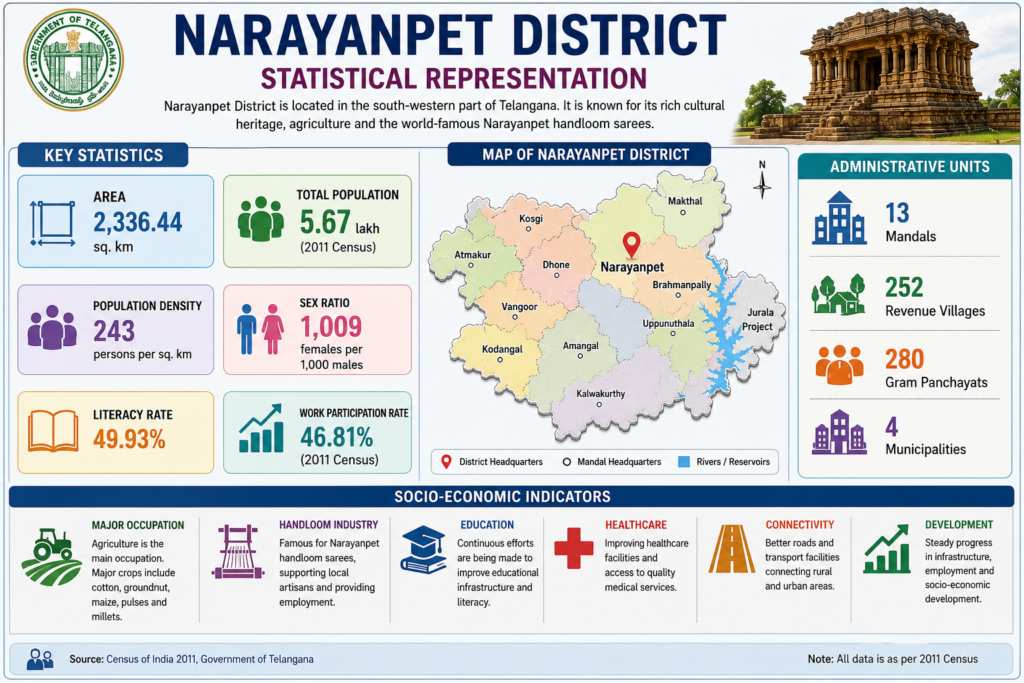
Narayanpet District Statistics
Narayanpet District presents a distinctive blend of demographic strength, administrative efficiency, and socio-economic development. Covering an area of 2,336.44 square kilometers, the district is home to approximately 5.67 lakh people, making it an important administrative and cultural region in Telangana. With a population density of 243 persons per square kilometer, the population is distributed across a network of villages, towns, and urban centers.The district maintains a favorable sex ratio of 1,009 females per 1,000 males, reflecting a balanced demographic structure. Narayanpet records a literacy rate of 49.93%, demonstrating continuous efforts toward educational advancement and human resource development. The district’s administrative framework consists of 13 mandals, 252 revenue villages, 280 gram panchayats, and 4 municipalities, ensuring effective governance and public service delivery.
The Historical Journey of Narayanpet
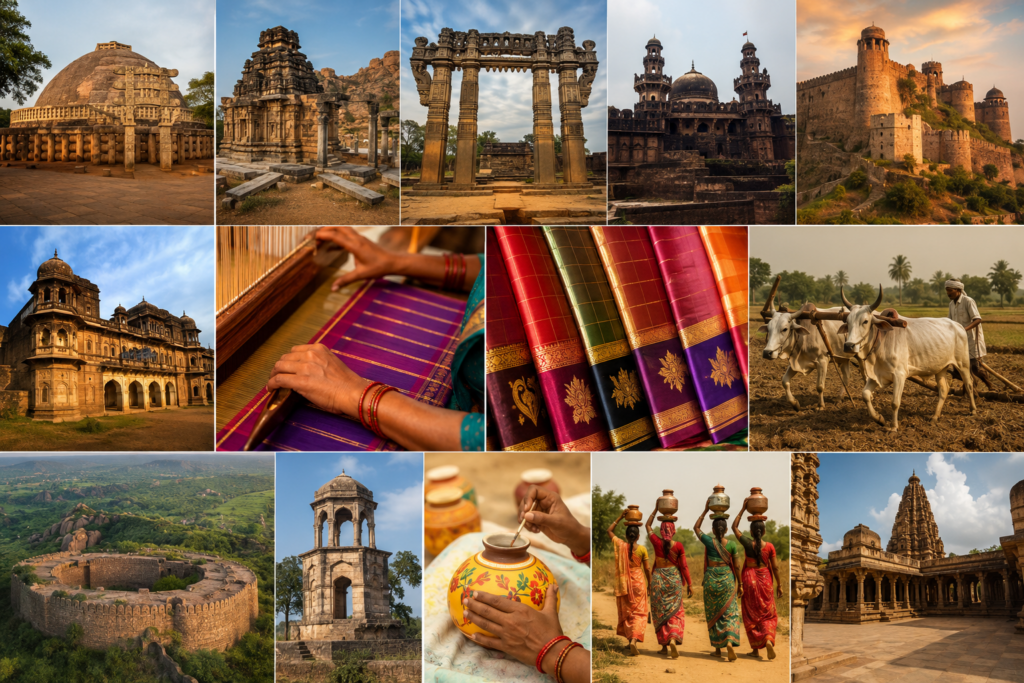
Narayanpet possesses a rich historical legacy that reflects the cultural and political evolution of the Deccan region over several centuries. The area was influenced by powerful dynasties such as the Satavahanas, Chalukyas, Kakatiyas, Bahmani Sultanate, and Qutb Shahi rulers, each contributing to its administrative systems, cultural traditions, and economic growth. Owing to its strategic location along important trade routes, Narayanpet gradually emerged as a thriving center for commerce, agriculture, and local craftsmanship. During the rule of the Nizams of Hyderabad, the region witnessed significant development and gained prominence for its flourishing handloom industry. The world-renowned Narayanpet Sarees, known for their vibrant colors, distinctive borders, and exceptional craftsmanship, became a symbol of the district’s cultural identity and continue to preserve its weaving heritage. Historically a part of Mahabubnagar District, .